
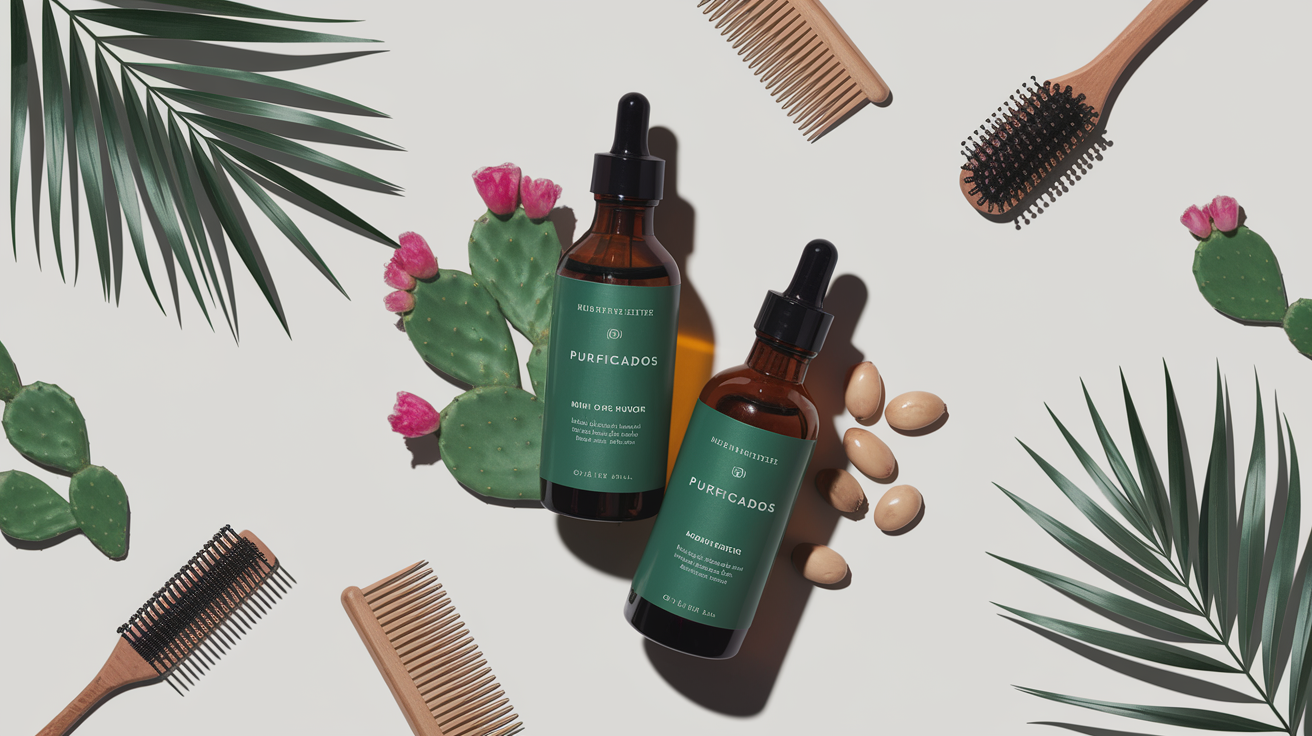
Prickly Pear Oil vs Argan Oil for Hair: Which One Wins?
Short answer: argan oil wins for dry, damaged, and frizzy hair. Prickly pear seed oil wins for fine hair, oily scalps, and anyone who wants maximum vitamin E without weight. But the real answer depends on your hair type — and if you can only choose one, the differences in their fatty acid profiles point clearly to which one suits you best.
Both oils come from Morocco. Both are cold-pressed and certified organic. Both have earned their place in serious hair care formulations. But they are not the same oil, and choosing based on “which is more popular” misses what actually matters: the chemistry.
The Chemistry Difference — Why It Matters for Hair
Hair responds to oils based on their fatty acid composition. Two numbers tell you almost everything you need to know before choosing:
| Property | Argan Oil | Prickly Pear Seed Oil |
|---|---|---|
| Oleic acid (C18:1) | 43–49% | 15–20% |
| Linoleic acid (C18:2) | 29–36% | 61–71% (latest COA: 71%) |
| Vitamin E (tocopherols) | High | Very high — among the richest known plant sources |
| Texture on hair | Medium-weight, smoothing | Ultra-lightweight, non-greasy |
| Best for | Dry, damaged, frizzy, thick hair | Fine hair, oily scalp, sensitive scalp |
| INCI name | Argania Spinosa Kernel Oil | Opuntia Ficus-Indica Seed Oil |
Oleic acid is a heavier, penetrating fatty acid — it goes deep into the hair shaft, repairs damage from the inside, and provides lasting moisture. This makes argan oil excellent for coarse, dry, or chemically treated hair that needs serious repair.
Linoleic acid is lighter and sits closer to the surface — it seals the hair cuticle, reduces moisture loss, and adds shine without weight. At 71%, prickly pear seed oil has one of the highest linoleic acid concentrations of any cosmetic oil. This is why it works so well for fine hair that argan oil can sometimes make look flat.
Argan Oil for Hair — What It Actually Does
Cold-pressed argan oil has been used in Moroccan hair care for centuries, and the chemistry explains why it stuck around. Its oleic-dominant profile means it penetrates the cortex of the hair shaft — not just the surface — which is what separates it from silicone-based serums that merely coat the hair without repairing anything.
Frizz control and smoothing
Argan oil smooths the hair cuticle, sealing lifted scales that cause frizz and flyaways. This effect is most pronounced on thick, coarse, or humidity-sensitive hair. A few drops worked through damp hair before drying is enough — the oleic acid fills in cuticle gaps and keeps them sealed as the hair dries.
Heat protection
Applied before heat styling, argan oil forms a thin lipid layer around each strand that reduces thermal damage. It does not replace a dedicated heat protectant spray for very high temperatures, but for everyday blow-drying and straightening it provides meaningful protection while conditioning at the same time.
Repair for chemically treated hair
Bleaching, colouring, and perming strip the hair’s natural lipid layer. Argan oil’s fatty acid profile closely matches the composition of the hair’s own sebum — which is why regular application genuinely restores a degree of that lost moisture and elasticity rather than just masking the damage.
Scalp nourishment
The tocopherols in argan oil reduce scalp inflammation, which is the root cause of dandruff in most cases. Massaged directly into the scalp 30 minutes before washing, argan oil restores the lipid barrier that a flaky scalp has lost. Consistent use — 2–3 times per week — produces visible results within two to three weeks for dry scalp conditions.
Prickly Pear Seed Oil for Hair — What It Actually Does
Prickly pear seed oil is the newer arrival in mainstream hair care, but among formulators it has been valued for years precisely because of that 71% linoleic acid content — a level that most other plant oils simply cannot match. Our prickly pear seed oil comes from our own 120-hectare ECOCERT-certified farm in the Souss region, pressed within 12 hours of seed separation to preserve the full tocopherol and fatty acid content.
Lightweight moisture for fine hair
Fine hair tends to look greasy and flat when treated with oleic-heavy oils. Prickly pear seed oil’s high linoleic content means it delivers hydration at the surface level — sealing the cuticle and preventing moisture loss — without the weight. One or two drops through damp fine hair adds noticeable softness and shine without any of the flatness that argan oil can cause at the wrong quantity.
Scalp sensitivity and inflammation
Prickly pear seed oil’s phytosterol content gives it strong anti-inflammatory properties — arguably stronger than argan oil for reactive or sensitive scalp conditions. For scalps prone to eczema flare-ups, redness, or irritation from product buildup, the combination of high linoleic acid and phytosterols provides a more targeted anti-inflammatory response than the oleic-dominant argan oil.
Vitamin E content
Prickly pear seed oil is one of the highest known plant sources of tocopherols. Vitamin E protects both the scalp and the hair shaft from oxidative damage — UV exposure, pollution, and heat styling all generate free radicals that degrade hair quality over time. The antioxidant protection from prickly pear seed oil is measurably higher than from argan oil, which matters for people who style frequently or spend significant time outdoors.
Shine without residue
The betalain pigments and tocopherols in prickly pear seed oil give treated hair a distinctly clear, glassy shine — the kind that reads as healthy rather than oily. For a finishing oil applied to dry hair before a photograph or event, prickly pear seed oil produces a cleaner visual result than argan oil at equivalent quantities.
Head-to-Head: 6 Hair Concerns Compared
| Hair Concern | Argan Oil | Prickly Pear Seed Oil | Verdict |
|---|---|---|---|
| Frizz control | Excellent — smooths cuticle deeply | Good — lighter seal | Argan wins |
| Fine hair moisture | Can feel heavy at higher amounts | Lightweight — no flatness | Prickly pear wins |
| Damaged / bleached hair | Deep repair via oleic acid penetration | Surface repair and protection | Argan wins |
| Scalp inflammation | Very good — tocopherols calm irritation | Excellent — phytosterols more targeted | Prickly pear wins |
| Antioxidant protection | High vitamin E | Very high vitamin E — richest known plant source | Prickly pear wins |
| Curly / coarse hair | Defines, nourishes, controls | Adds shine, lighter hold | Argan wins |
Can You Use Both Together?
Yes — and for many hair types, combining them gives better results than either alone. The oleic acid in argan oil penetrates the hair shaft while the linoleic acid in prickly pear seed oil seals the cuticle around it. A blend of roughly 70% argan oil to 30% prickly pear seed oil works well as a pre-wash treatment for dry, thick hair. For fine hair, reverse the ratio — 70% prickly pear to 30% argan — to get the repair benefit of argan without the weight.
Cosmetic formulators increasingly use this combination for this reason: the two oils are genuinely complementary at a biochemical level, not just marketing bundling.
How to Use Each Oil
Argan oil — application guide
- Pre-wash scalp treatment: 6–8 drops massaged into dry scalp, left 30 minutes minimum, then shampooed out. 2–3 times per week for dandruff or dry scalp.
- Post-wash frizz control: 2–4 drops worked through towel-dried hair from mid-lengths to ends before blow-drying.
- Heat protection: 1–2 drops smoothed through hair immediately before heat styling.
- Overnight repair mask: 8–10 drops worked through dry hair, covered with shower cap, washed out in the morning. Once per week for damaged hair.
Prickly pear seed oil — application guide
- Fine hair moisture: 1–2 drops worked through damp hair before drying — focus on mid-lengths and ends, avoid roots.
- Scalp treatment: 4–5 drops massaged into scalp 20–30 minutes before washing. Especially effective for inflamed or reactive scalps.
- Finishing oil: 1 drop warmed between palms, smoothed lightly over dry hair for shine. Works on all hair types.
- Antioxidant protection: Applied to damp hair before outdoor exposure or heat styling to reduce UV and thermal oxidative damage.
The Verdict
Choose argan oil if your main concerns are frizz, dryness, heat damage, or chemically treated hair. Its oleic acid penetrates deeply and repairs from within — no other commonly available oil does this as reliably at an accessible price point.
Choose prickly pear seed oil if you have fine hair that goes flat with heavier oils, a sensitive or inflamed scalp, or if antioxidant protection is a priority. Its 71% linoleic acid content and exceptional tocopherol levels are genuinely rare in the plant oil world.
Use both if you want the complete picture — deep repair from argan, surface protection and antioxidant defence from prickly pear. The blend is used in professional formulations for good reason.
Both oils are available in bulk from our Agadir facility — ECOCERT and USDA-certified argan oil and prickly pear seed oil from our own 120-hectare farm — cold-pressed at 18°C with COA per lot. Request a sample or bulk quote and we will respond within 1–2 business days.
